
Git blame flaw let DeepSeek-Reasonix run commands unapproved
A safety classifier in the coding agent wrongly treated two git commands as read-only, allowing attacker-chosen code to run with the user's privileges.
By The Agentic Times ·
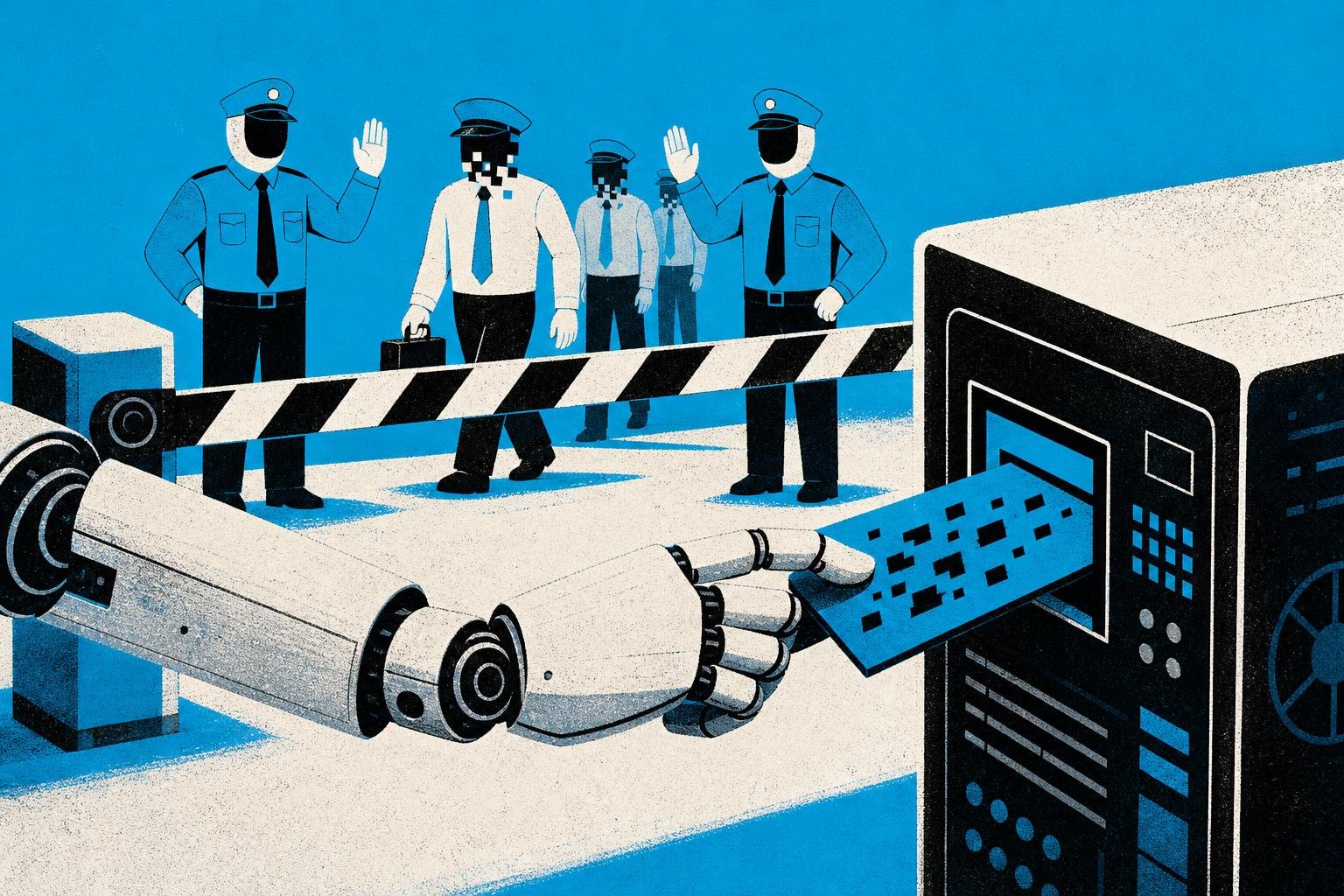
A command execution flaw in DeepSeek-Reasonix, a coding agent, allowed attackers to run commands on a user's machine without approval, according to an entry published in the US National Vulnerability Database on 25 November 2026. The issue is tracked as CVE-2026-137056 and affects all versions before 2.53.0.
The root of the problem is the agent's shellsafe classifier, the component that decides whether a shell command is safe enough to run without asking the user first. According to the NVD record, the classifier treated git blame and git whatchanged as read-only operations. Both commands only inspect a repository's history, so on the surface they look harmless.
They are not. Git allows a repository to define a diff textconv driver, a helper program that git runs to convert files into text before comparing them. The driver is configured in the repository's .gitattributes file and in .git/config. According to the advisory, an attacker who can plant those two files can make git blame execute commands of their choosing.
That gives two routes in. The first is prompt injection, where instructions hidden in content the agent reads cause it to run the command. The second is simply routine use: a developer asks the agent who last changed a line of code, and the agent reaches for git blame on its own. In both cases the auto-approval logic means no confirmation prompt appears.
The commands run with the user's privileges. The NVD entry says the exposure includes stored provider API keys and session history, both of which typically sit in files the user can read. An agent that holds credentials for one or more model providers is an attractive target, because those keys can be reused elsewhere.
The pattern here is a familiar one for agent security. Allow-lists of "safe" commands are only as good as the assumption that a command does what its name suggests. Git is highly configurable, and much of that configuration lives inside the repository itself, which is exactly the untrusted input a coding agent is pointed at. A command that reads a repository can therefore be turned into a command that executes code from that repository.
The NVD record lists a fix commit and a release tag for version 2.53.0, alongside a GitHub security advisory, GHSA-m46m-j2rc-6ff4, and an advisory from VulnCheck. The references also point to the vulnerable classifier code in an earlier release, version 1.39.11, indicating the flawed logic had been in place for some time. Users on any version before 2.53.0 should upgrade.
The record does not say whether the flaw was exploited in the wild, and no exploitation has been reported in the sources available. It also does not name a discoverer. The incident has been classified as a tool misuse problem rather than a flaw in the underlying model: nothing about the language model was broken, but the harness around it made an unsafe assumption about what a shell command could do.
For teams running coding agents, the practical lesson is that cloning or opening an untrusted repository is itself a privileged action. Repository-local configuration files such as .gitattributes and .git/config should be treated as attacker-controlled input, not as inert project metadata.
Sources
- nvd.nist.govhttps://nvd.nist.gov/vuln/detail/CVE-2026-137056