
Dark Reading warns AI agents could become the next BEC target
A commentary published on 9 October 2026 argues that AI agents with authority over business systems can be talked into harmful actions much like human staff.
By The Agentic Times ·
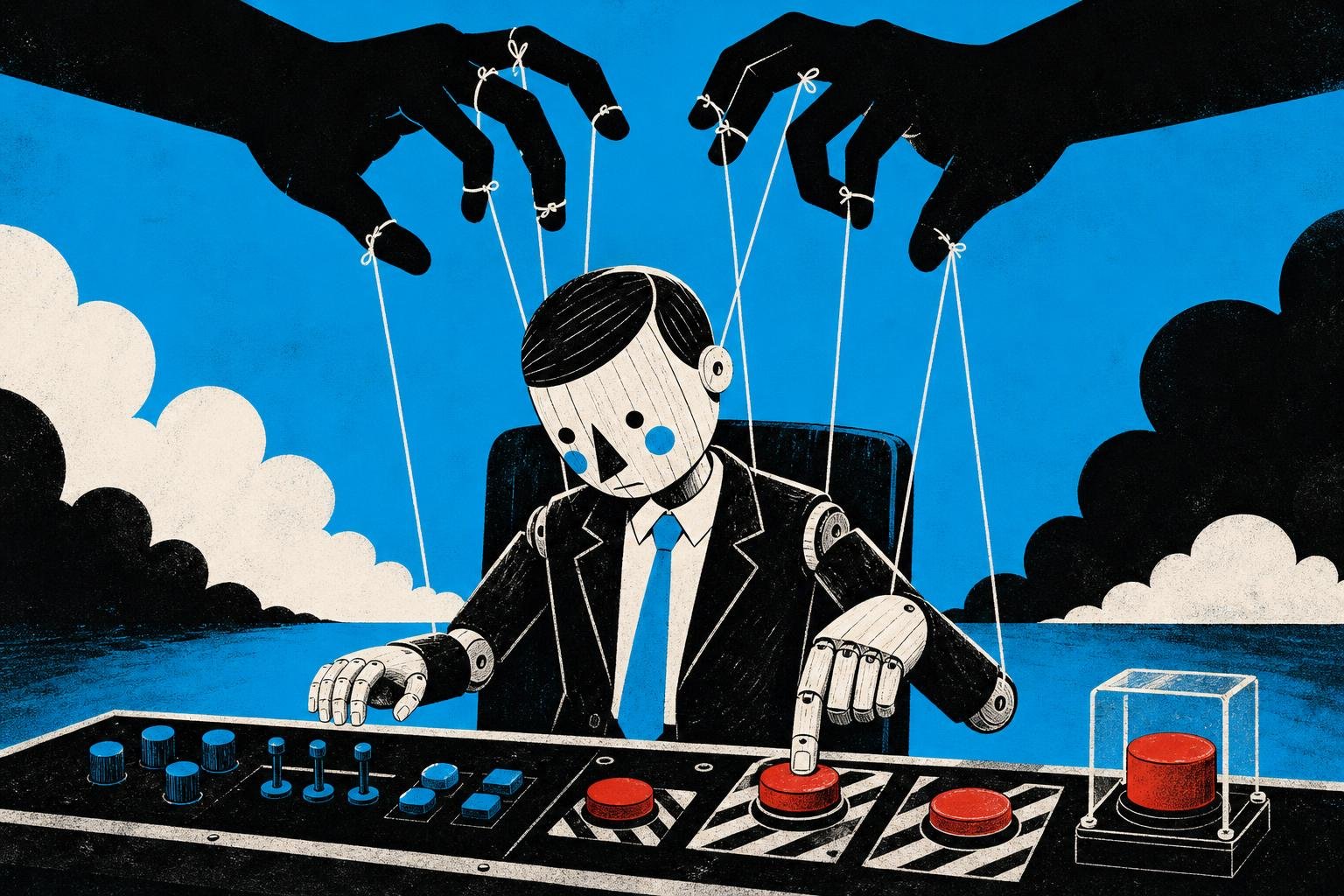
Attackers may increasingly aim their social engineering at software rather than staff, according to a commentary published by Dark Reading on 9 October 2026. The piece argues that as AI agents gain authority over business systems, attackers can manipulate them in the same way they manipulate the human victims of business email compromise, the fraud technique in which a convincing message persuades an employee to move money or hand over data.
The framing matters because the defensive playbook for business email compromise, usually shortened to BEC, was built around people. It assumes a human reads a message, feels urgency or deference, and acts. Awareness training, call-back verification and finance team sign-off all depend on a person being in the loop. Dark Reading's argument is that the loop is changing. Where an agent has been granted the authority to act inside business systems, the thing being persuaded is no longer a person, and the usual human checks do not apply to it.
The commentary presents this as the shape of the threat for 2026 rather than as a report of a specific breach. It does not, in the material available, name a victim organisation, a vendor product or a confirmed incident. Readers should treat it as an argument about where attacker effort is likely to move, not as evidence that a wave of agent-targeted fraud has already arrived.
The underlying point is about permissions. An AI agent only becomes an attractive target if it can do something valuable. That means access to mailboxes, payment systems, ticketing tools, customer records or internal applications. The more authority an agent holds, the more closely it resembles the finance clerk or executive assistant that BEC crews already study and impersonate. The difference is that an agent can be approached at scale, does not get tired, and may have no equivalent of a colleague leaning over to ask whether an instruction looks odd.
For security teams, the practical questions follow from that. Which agents are running, who approved them, and what are they allowed to touch? Does any agent have standing authority to move money, change supplier bank details or grant access? Is there a human approval step for high-value or irreversible actions, and is that step enforced by the system rather than by policy alone? Are an agent's actions logged in a way that would let an investigator reconstruct who or what instructed it?
None of those controls are new ideas. They are the same separation-of-duties and least-privilege measures that organisations already apply to staff accounts. The argument in the Dark Reading piece is simply that agents now need to be inside that scope, and that treating them as trusted internal tools rather than as potential fraud targets leaves a gap. How quickly attackers exploit that gap, and in what volume, is not something the commentary quantifies.
Sources
- darkreading.comhttps://darkreading.com/cybersecurity-operations/social-engineering-ai-agents-bec-2026